
Jolly Phonics Books Explained: Teacher’s Book and Pupil Books 1, 2 and 3
Jolly Phonics has one Teacher’s Book and three Pupil Books. The Teacher’s Book holds the lesson plans for the adult. Pupil Books 1, 2 and 3 are write-in activity books for the child, used in that order: first the 42 sounds, then alternative spellings and tricky words, then consolidation with sentences and comprehension.
This guide explains what each book teaches, how they fit together and which to start with. It is part of our complete guide to Jolly Phonics.
Table of Contents
- The Four Jolly Phonics Books at a Glance
- How the Books Fit Together
- Which Book Should You Start With?
- What Each Book Teaches: The Five Skills
- How the Books Connect to the 42 Sounds, Alternatives and Tricky Words
- Print or Precursive, Colour or Black and White?
- Using the Books at Home, in Class and Online
- What the Books Do Not Do
- Study Path: How to Read This Guide
- Frequently Asked Questions
Quick answer
- The Four Jolly Phonics Books at a Glance Written by Sue Lloyd and Sara Wernham and published by Jolly Learning.
- How the Books Fit Together The three Pupil Books follow the same journey a child takes in Jolly Phonics.
- What Each Book Teaches: The Five Skills Jolly Phonics teaches five skills: learning the letter sounds, learning letter formation, blending, identifying the sounds in words, and tricky words.
- How the Books Connect to the 42 Sounds, Alternatives and Tricky Words If you are studying the method, these pages on our site go with the books:
- Print or Precursive, Colour or Black and White? Jolly Learning publishes the books in more than one edition.
The Four Jolly Phonics Books at a Glance
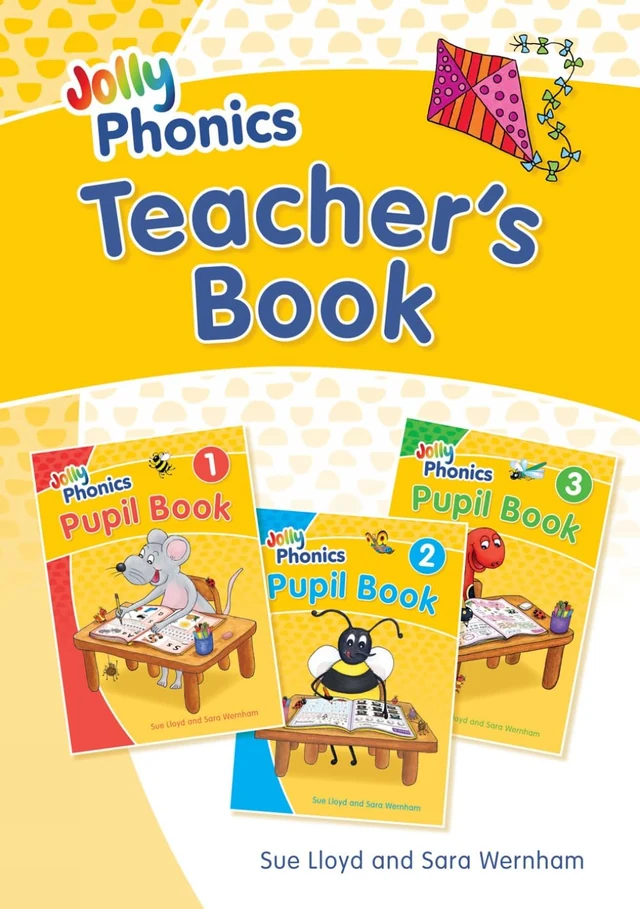 Teacher’s BookThe lesson guide
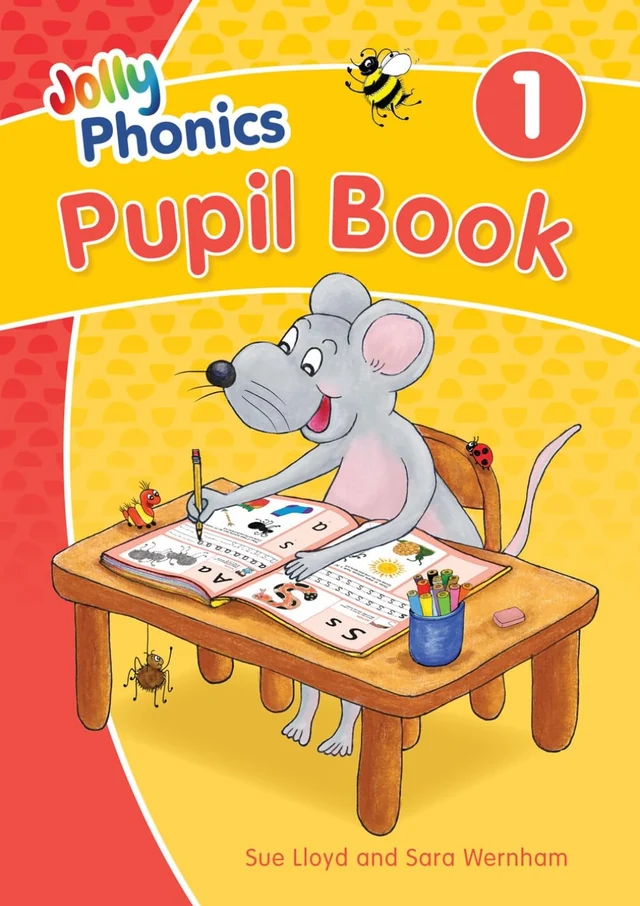 Pupil Book 1The 42 sounds
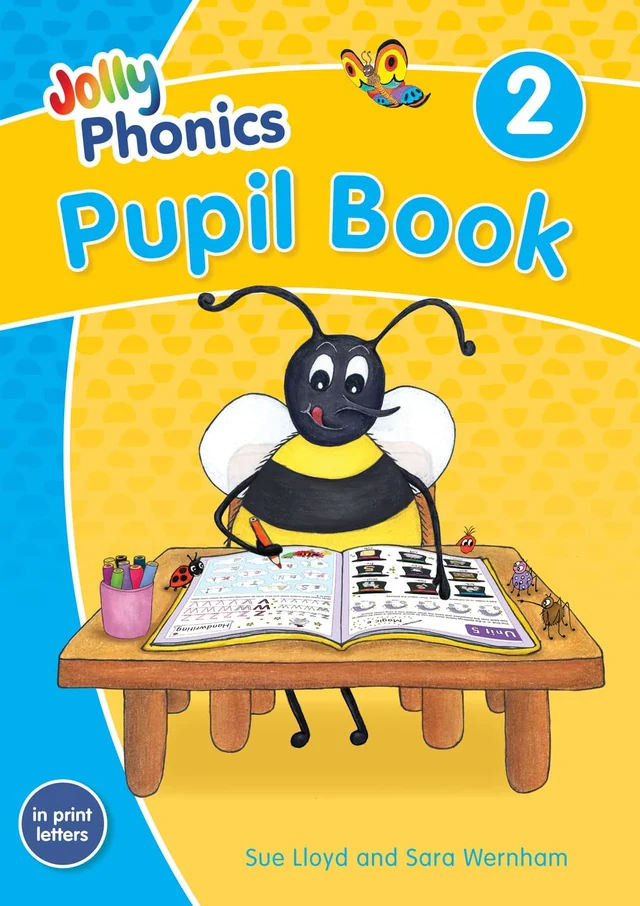 Pupil Book 2Alternative spellings
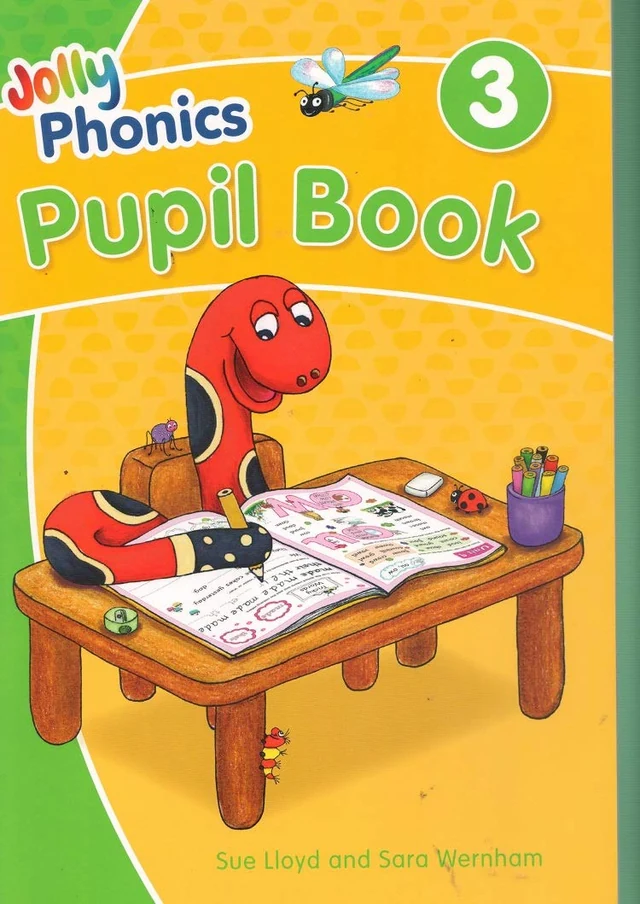 Pupil Book 3Sentences and comprehension
Written by Sue Lloyd and Sara Wernham and published by Jolly Learning. Cover images © Jolly Learning, shown here to identify the books.
Jolly Phonics has one Teacher’s Book and three Pupil Books. The Teacher’s Book is for the adult and holds the lesson plans. Pupil Books 1, 2 and 3 are write-in activity books for the child, used in that order.
| Book | Who it is for | What it covers | Print-letters ISBN |
|---|---|---|---|
| Teacher’s Book | The teacher, tutor or parent | Lesson plans and guidance for every page of Pupil Books 1–3, plus background, checklists and extra support | 978-1-83582-401-6 |
| Pupil Book 1 | The child, first | The 42 main letter sounds, each with a story and action; reading and writing simple regular words; the first tricky words | 978-1-84414-719-9 |
| Pupil Book 2 | The child, second | Main alternative vowel spellings, capital letters and the alphabet, more tricky words, guided writing | 978-1-84414-720-5 |
| Pupil Book 3 | The child, third | New alternative spellings, new tricky words, words and sentences, reading comprehension | 978-1-84414-721-2 |
Each book has its own page in this guide, with a syllabus-style breakdown, the skills it builds and how to use it. Use the links in the table to open them.
How the Books Fit Together
The three Pupil Books follow the same journey a child takes in Jolly Phonics. First the sounds, then the other ways English spells them, then more reading and writing practice. The Teacher’s Book sits beside all three.
| Step | Book | The child is learning to… | The adult uses… |
|---|---|---|---|
| 1 | Pupil Book 1 | Say, write and blend the 42 main sounds; read and write simple words; meet the first tricky words | Teacher’s Book lesson plans for Book 1 |
| 2 | Pupil Book 2 | Spell sounds in more than one way; write capital letters; learn the alphabet; read and write short pieces with guidance | Teacher’s Book lesson plans and answer keys for Book 2 |
| 3 | Pupil Book 3 | Consolidate: new spellings, new tricky words, words and sentences, reading comprehension | Teacher’s Book lesson plans and answer keys for Book 3 |
The publisher’s own description is that Book 2 “builds on” Book 1 and Book 3 “builds and consolidates” Books 1 and 2. So the order matters more than the child’s age. A child who is new to phonics starts at Book 1 whatever their age.
Which Book Should You Start With?
| Your situation | Start here |
|---|---|
| You are teaching a child who is new to phonics | Teacher’s Book and Pupil Book 1 |
| Your child knows most of the 42 sounds but is shaky at blending | Pupil Book 1, going back over the blending practice with the Teacher’s Book |
| Your child has finished Book 1 and reads simple words | Pupil Book 2 |
| Your child has finished Book 2 and needs more practice with spellings, tricky words and sentences | Pupil Book 3 |
| You are a teacher or tutor planning lessons | Teacher’s Book first, then the Pupil Book for each child’s level |
| Your child is 7–12 and has missed early phonics | Read about advanced phonics for older children first. These books are written for early learners |
Not sure where your child is? A short check of the sounds and blending shows the answer. You can book a free demo class and we will look at where they are.
What Each Book Teaches: The Five Skills
Jolly Phonics teaches five skills: learning the letter sounds, learning letter formation, blending, identifying the sounds in words, and tricky words. The books spread these skills out in different ways.
| Skill | Teacher’s Book | Pupil Book 1 | Pupil Book 2 | Pupil Book 3 |
|---|---|---|---|---|
| Letter sounds | Lesson plans for each sound; code chart | The 42 main sounds, each with story and action | Main alternative vowel spellings | New alternative spellings |
| Letter formation | Teaching steps and checklists | Formation practice for each sound | Capital letters and the alphabet | Handwriting kept going in words and sentences |
| Blending | Blending steps and word banks | Blending practice for simple regular words | Reading words and short pieces | Reading words, sentences and comprehension |
| Identifying sounds in words | Sounding and dictation steps | Listening for each sound in words | Hearing sounds when spelling alternatives | Spelling and sentence work |
| Tricky words | Guidance for each tricky word set | The first tricky words | More tricky words | New tricky words |
How the Books Connect to the 42 Sounds, Alternatives and Tricky Words
If you are studying the method, these pages on our site go with the books:
- The 42 sounds of Jolly Phonics, with the seven groups: Group 1, Group 2, Group 3, Group 4, Group 5, Group 6, Group 7. These match the content of Pupil Book 1.
- Alternative spellings, which match the main focus of Pupil Book 2 and Pupil Book 3.
- The 72 tricky words, taught across all three Pupil Books.
- How to teach blending, letter formation and segmenting, the skills behind the activities.
- A Jolly Phonics lesson plan, which shows how a Teacher’s Book style lesson runs.
Print or Precursive, Colour or Black and White?
Jolly Learning publishes the books in more than one edition. They teach the same sounds and words.
- Print letters use simple separate letter shapes.
- Precursive letters include small entry and exit strokes that prepare children for joined-up writing.
- Colour and black-and-white editions carry the same content. The colour edition has the refreshed design with colour-coded sections.
- The ISBN changes with the edition. The ISBNs on these pages are for the print-letters editions unless we say otherwise.
Choose the letter style your child’s school uses, so handwriting at school and at home match. If your child is not yet in school, ask the school you expect to join. The Teacher’s Book has to match the Pupil Books you use.
Using the Books at Home, in Class and Online
A book is a tool. The routine around it does the teaching.
- At home: read the Teacher’s Book lesson first, teach the sound with its story and action, then let the child do the Pupil Book page. Keep it short. Our 15-minute daily routine shows one way to do it.
- In class: teach the whole class, then use the Pupil Book page as individual or paired practice. Use the Teacher’s Book answer keys to check it.
- Online: the teacher can share the sound, action and blending live, while the child writes in the book at home. Parents need to keep the book open and a pencil ready.
What the Books Do Not Do
It helps to know the limits.
- They do not replace teaching. A child still needs an adult who models the sounds clearly and checks blending.
- They are not a guarantee of any reading outcome. Progress depends on the child, the practice and the teaching.
- They are written for early learners. Older children who missed phonics usually need a different level of teaching: see our advanced phonics guide.
- They do not diagnose reading difficulties. If you are worried about your child’s reading, speak to a qualified professional as well.
Study Path: How to Read This Guide
If you want to learn the books properly, read the four pages in this order:
Independent study guide. Jolly Phonics books are written by Sue Lloyd and Sara Wernham and published by Jolly Learning. Jolly Reading is an independent teaching and training provider. We do not publish or sell these books, and this page is not an official publisher page. Book details come from the publisher’s catalogue and product listings; check your own copy for the exact edition, page layout and price.
Frequently Asked Questions
How many Jolly Phonics books are there? +
The core set is one Teacher’s Book and three Pupil Books (1, 2 and 3). Jolly Learning also publishes other resources, such as The Phonics Handbook, readers and the Jolly Grammar series, but the Teacher’s Book and Pupil Books 1–3 are the main books used with children.
In what order should I use the Jolly Phonics Pupil Books? +
Use them in order: Pupil Book 1, then 2, then 3. Each builds on the one before it. The Teacher’s Book is used alongside all three.
Do I need the Teacher’s Book if I buy the Pupil Books? +
It is strongly recommended. The Pupil Books are the child’s write-in activity pages. The lesson plans and answer keys for them are in the Teacher’s Book.
Which Jolly Phonics book is best for a beginner? +
Pupil Book 1, used with the Teacher’s Book. It starts with the 42 main letter sounds.
What is the difference between print and precursive Jolly Phonics books? +
Both teach the same content. Print letters are simple separate shapes. Precursive letters have small entry and exit strokes that prepare children for joined-up writing. Pick the style your child’s school uses.
What age are the Jolly Phonics Pupil Books for? +
They are written for children in their first years of learning to read and write. The UK publisher listing gives 3–6 years for the Pupil Books we checked. Use the order of the books, not age alone, to decide where to start.
Are the Jolly Phonics books enough to teach a child to read? +
They are the programme’s core materials, but they work best with an adult teaching the lessons. The pace and the result depend on the child, the amount of practice and the quality of teaching.
Does Jolly Reading sell the Jolly Phonics books? +
No. The books are published by Jolly Learning. Jolly Reading is an independent teaching and training provider and offers live classes and teacher training that follow the Jolly Phonics method.