
Is Your Child Still Struggling With Reading or Spelling?
Help your 7–12-year-old build stronger reading and spelling skills through structured online phonics classes.
Only 5–6 children per batch, giving learners more opportunities for personal attention and individual guidance.
Does Your Child…
You may notice your child:
Your Child Shouldn't Get Lost in the Crowd
We intentionally keep our batches to just 5–6 children so educators have more opportunity to interact with individual learners, notice where they need support, and provide personal guidance during lessons.
More Teacher Attention
Fewer learners for the educator to observe means more chances to notice where your child needs support.
More Opportunities to Participate
More chances to answer, read aloud and practise in every session.
Individual Guidance
Targeted correction and support when a specific gap shows up.
Focused Learning Environment
A smaller group can make live online lessons feel more manageable and engaging.
Built by Megha Vyas, Not Off-the-Shelf Jolly Phonics
Advanced Phonics is not officially part of the standard Jolly Phonics curriculum. It was developed by Megha Vyas herself, after years of evaluating individual children and struggling readers in higher grades. Through that hands-on work, she identified exactly what older students needed to know to overcome their specific reading challenges — and built this programme and curriculum around those findings. (New to the method itself? See what Jolly Phonics is and how the core 5 skills work.)
Reading comes first
Her priority from the start was reading itself, not just learning rules in isolation.
Real subject books
Students read from their own school subject books, not generic worksheets.
Newspapers for Practice
Real-world reading applies the full syllabus logic to text they'll actually encounter.
Reading Levels Rise Every Year — So Words Get Bigger, Too
A child who can only sound out short, simple words gets stuck exactly when it matters most: as school textbooks move from Std 2 to Std 3, 4, 5 and beyond, the words get longer and more complex. Advanced phonics gives your child a system for breaking any big, unfamiliar word into smaller pieces — so a long word isn't scary, it's just a few small chunks joined together.
4 syllables, not one scary word. This is one of the six syllable types your child learns to spot.
Spotting the common -tion ending is part of the programme's suffix training — once a child knows it, dozens of other words unlock too.
Prefix un-, root believe, suffix -able — this is the morphology and prefix/root/suffix training built into the curriculum.
Every child progresses at their own pace — these examples show the technique, not a guaranteed timeline.
Advanced Phonics, Explained Simply
A structured programme covering decoding, encoding and morphology — the skills that carry a reader from "knows the sounds" to "reads fluently."
It targets specific gaps in older children, not a re-run of foundation phonics.
Just 5–6 children, guided live by the educator through targeted practice.
Your child's own school books and newspaper headlines, not just worksheets.
Breaking words into syllables and word parts turns unfamiliar words into manageable ones.
Practising on real text builds the confidence to read anything, not just practice sentences.
What's Covered in the Advanced Phonics Curriculum
Jolly Phonics Basic Level Sounds
A quick review of the foundation 42 letter sounds, making sure the basics are solid before building on them.
42 Advanced Sounds
Digraphs, trigraphs and silent consonants, beyond the foundation sounds.
Six Syllable Types
Vowel-consonant-e, open & closed syllables, vowel teams, and more.
Morphology
Prefixes, roots and suffixes — how word parts combine and change meaning.
Schwa & Vowel-r
The tricky, less obvious vowel sounds that trip up many older readers.
Tenses & Plurals
Regular and irregular tenses, and singular/plural spelling rules.
Real-World Reading
Practice using your child's own school syllabus books and newspaper headlines.
How Advanced Phonics Classes Work
Assess / Demo
A free demo class to understand where your child is starting from.
Identify Learning Needs
Pinpoint the specific phonics gaps affecting reading and spelling.
Small-Batch Advanced Phonics
Live online sessions focused on the identified gaps, with only 5–6 children.
Monitor Progress
Continuous assessments with personalised feedback.
This programme is educational, not diagnostic. It does not diagnose or treat dyslexia or other learning difficulties. Where a formal professional assessment may be appropriate, we will always say so.
Live teacher interaction
Your child works directly with a real educator, not a recording.
Only 5–6 learners
Small enough for the educator to track each child's specific gaps.
Structured, targeted lessons
Time isn't spent on skills your child has already mastered.
8-month structured programme
Twice a week, 1 hour per class, building progressively toward fluent reading and spelling.
Can Advanced Phonics Really Help Online?
It's a fair question for an older child with specific gaps. Here's what actually makes small-batch live classes work:
Book a Free Demo ClassWhat Your Child Gets
- Live online advanced phonics classes
- A small batch of only 5–6 children
- Structured programme covering decoding, encoding and morphology
- Practice using your child's own school syllabus books and newspapers
- A free initial demo class
- Continuous progress assessments
What Parents of Older Learners Say
“When my son Vedant was in 2nd grade he was not able to read, pronounce or form sentences in English. After joining, I've seen drastic changes — he became more confident and fluent. He continued learning phonics and grammar for 4 years.”
“Aarav developed reading fluency and expressive writing skills under her teaching. Megha miss built confidence in him and motivated him for English speaking.”
Why You Can Trust Us With Your Child's Reading
Megha Vyas
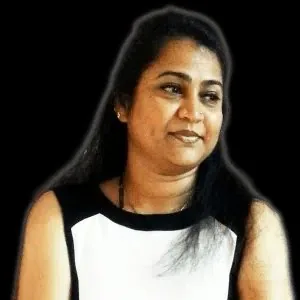
Megha Vyas is the founder of Jolly Reading and a passionate literacy educator with over 23 years of experience teaching phonics. She specialises in helping teachers, schools and parents build strong reading foundations through structured phonics instruction.
- Certified in Jolly Phonics & Jolly Grammar through Jolly Phonics CPD College, UK
- Former Air India cabin crew — brings expert pronunciation and phonemic awareness to every session
- Certified Remedial Educator, with hands-on experience supporting children with reading and spelling difficulties
- 2000+ teachers trained across India through structured Jolly Phonics methodology
“To empower learners with the skills, confidence, and proven strategies needed to become successful, lifelong readers.”
What Our Fee Covers
What the fee covers
- Live, teacher-led sessions: taught in real time, not recorded
- Small batches of only 5–6 children: so every child gets heard
- Individual attention: the teacher listens to each child read and corrects in the moment
- Structured phonics learning: sounds, blending and spelling taught in a planned order
- Progress support: the teacher keeps track of what is secure and what to practise next
About our fees
- Fees depend on the level and batch
- We share current fees when you enquire
- Every child starts with a free demo class and level check
Advanced Phonics — Frequently Asked Questions
How do I know whether my child needs advanced phonics? +
If your child can read some words but still struggles with unfamiliar or longer words, hesitates while reading, or makes frequent spelling errors, advanced phonics may help. A free demo class is the best way to find out.
What if my child already knows basic phonics? +
That's exactly who this programme is for. It builds on existing phonics knowledge and closes the specific gaps that basic phonics alone doesn't cover — like multi-syllable words, morphology and spelling rules.
Is advanced phonics just extra practice? +
No. Advanced phonics is a structured programme built specifically for older children, targeting decoding, encoding and morphology gaps rather than simply repeating earlier phonics content.
What age is this programme for? +
Designed for children aged approximately 7–12. [Our reference materials show slightly different ranges in different places — 6–12 in one spot, 7–14 in another — so please confirm the exact range you want published.]
Can advanced phonics help with spelling as well as reading? +
Yes. The programme covers both reading (decoding) and spelling (encoding), including tenses, singular/plural rules and long vowel spelling patterns, so children build accuracy in both directions.
Can the programme support a child who struggles with longer or unfamiliar words? +
Yes — that's a core focus. Children are taught to break long words into syllables and recognisable word parts (prefixes, roots, suffixes) so unfamiliar words become manageable instead of overwhelming.
How long is the programme, and how often are classes? +
The full programme runs 8 months, with classes twice a week for 1 hour each — the same schedule as our foundation classes.
How many children are in a batch? +
Only 5–6 children per batch, so every child gets more opportunities for individual attention and guidance.
What is the fee? +
The full 8-month programme is ₹20,000. Pricing is occasionally updated, so please confirm the current fee when you enquire.
Does the programme use my child's actual school books? +
Yes — the programme incorporates your child's own school syllabus books alongside real-world reading material like newspaper headlines, so practice connects directly to what they need at school.
Will my child be assessed for a learning difficulty? +
This programme does not diagnose learning difficulties. Where a formal professional assessment may be appropriate, we will let you know. Read our guide to dyslexia and phonics for signs and how assessment works.
What does the fee cover? +
Our fee covers live, teacher-led sessions, small batches of only 5–6 children, individual attention, structured phonics learning and progress support. We share current fees when you enquire.
Is it too late to start phonics at 8, 10 or 12? +
No. Older children who have gaps in decoding or spelling can still learn with structured phonics. The material and pace need to suit their age, and a level check shows where to begin.
Is there a hardest age to teach phonics? +
There is no single hardest age, because difficulty depends on the child's stage rather than the number. In our teaching experience, the youngest learners (under 4) can find it hardest, because attention span, following instructions and pencil control are still developing. Older children who have learned to guess words can also find it hard at first, because they have to slow down and decode. Both settle with a clear sound order, short practice and patient correction.
Ready to Help Your Child Close Their Phonics Gaps?
Start with a free demo and discover whether our advanced phonics programme is right for your child.
Only 5–6 Children Per Batch
What Parents of Older Learners Say on Google
Reviews from parents of children who joined at school age. Two reviews so far; more will be added.
My daughter joined the course in 2022. She has improved a lot with in couple of months. She was in class 2. Now she can read 10 letter words also very easily.. Mam makes the students practice the concepts througouly. It helps her a lot. Thankyou Mam for making her very comfortable reading the sentences.
My daughter has improved to a great extent after doing the phonics class with Megha mam. With the absence of classroom school for two years reading was a struggle for my daughter. But things started changing after joining Megha mam’s class. A teacher with her extremely well designed curriculum and disciplined way of teaching is not what we get easily. She is strict in the sense of disciplined study, at the same time never making it boring for the students.. my daughter enjoying attentively the full session of each classes. Thanking you mam. After doing the advanced phonics course, I am sure, my daughter will be more confident.
Reviews are shown exactly as written on Google, including spelling and grammar. Hover to pause.